Solid Timber Flat Pack Desks: Quality Workspace Guide
1 September 2026 · 16 min read

Most flat-pack furniture is built to be replaced, not repaired. You’ve likely felt the frustration of a desk that wobbles after six months or a thin laminate surface that begins to peel at the edges. It’s a common compromise where you trade long-term durability for the convenience of easy delivery. However, solid wood flat pack desks are changing this standard by merging high-end raw materials with precision engineering. You deserve a workspace that feels as steady as the floor beneath it, even if it arrives at your door in a compact package.
We agree that your furniture should be a lasting investment rather than a temporary fix. You want a minimalist, functional office without the headache of poor hardware or the difficulty of moving heavy, pre-assembled timber. This guide will help you choose a kitset desk that combines the ease of a flat-pack with the lifelong durability of master craftsmanship. We’ll look at the benefits of our EasyFit range, explain how CNC machining ensures a perfect fit, and show you why sustainably sourced timber is the superior choice for a productive environment.
Key Takeaways
- Understand why solid timber outperforms veneer and MDF when it comes to structural integrity and holding fasteners securely over time.
- Discover how precision CNC machining eliminates the common wobble often found in lower-quality solid wood flat pack desks.
- Identify the specific features, such as desktop thickness and timber grade, that separate premium furniture from temporary alternatives.
- Explore the EasyFit philosophy, which ensures a straightforward assembly experience without the need for a full workshop of tools.
- Learn how to transition from a temporary work-from-home setup to a permanent, sustainable office that is built to last a lifetime.
The Evolution of the Home Office: Why Solid Wood Flat Pack Desks are Trending
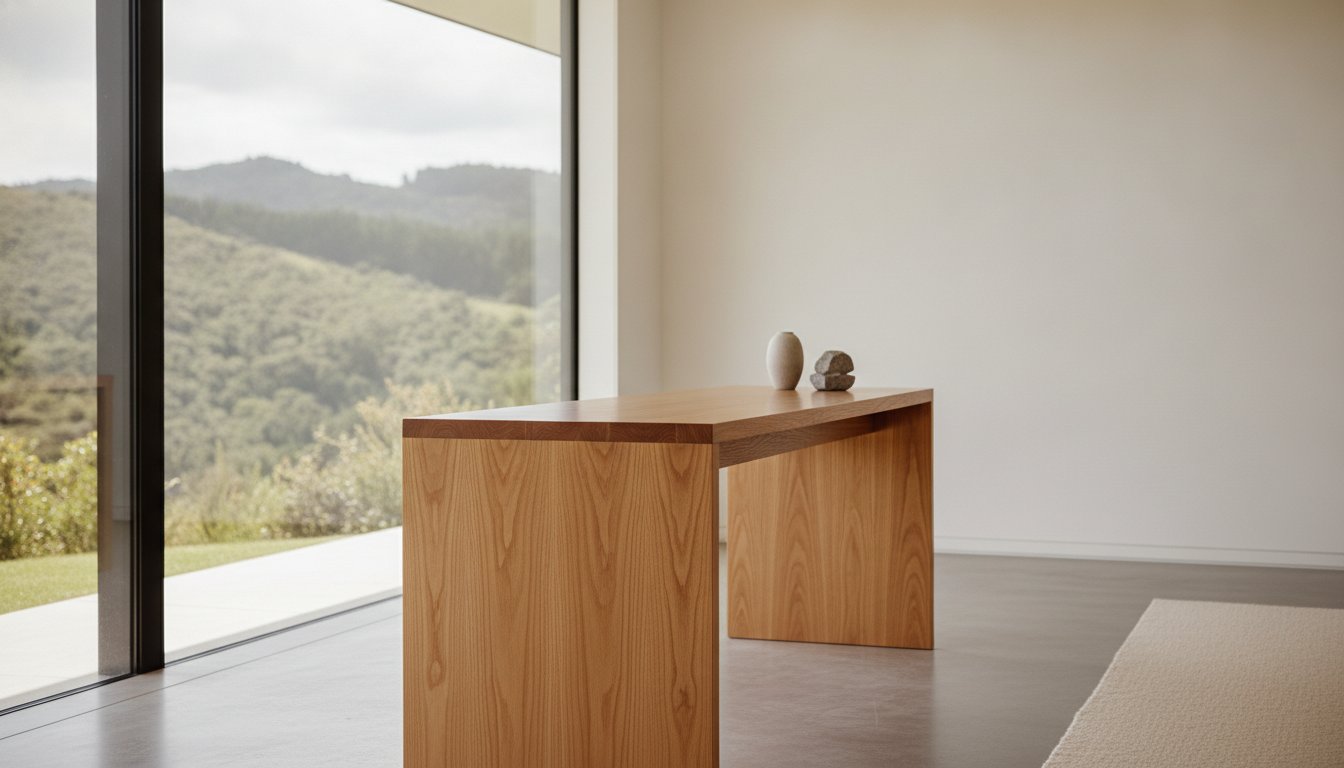
The modern home office has matured. We've moved past the era of the makeshift kitchen table setup and into a phase where our workspaces are permanent, dedicated environments. As we spend more time at our desks, the physical quality of our surroundings has become a priority. We are seeing a distinct move toward solid wood flat pack desks as people realise that a workspace should be as enduring as the architecture of the home. This shift is part of a larger trend toward flat pack solid timber furniture, which combines the logistical ease of modern shipping with the structural integrity of traditional materials.
The Problem with Disposable Office Furniture
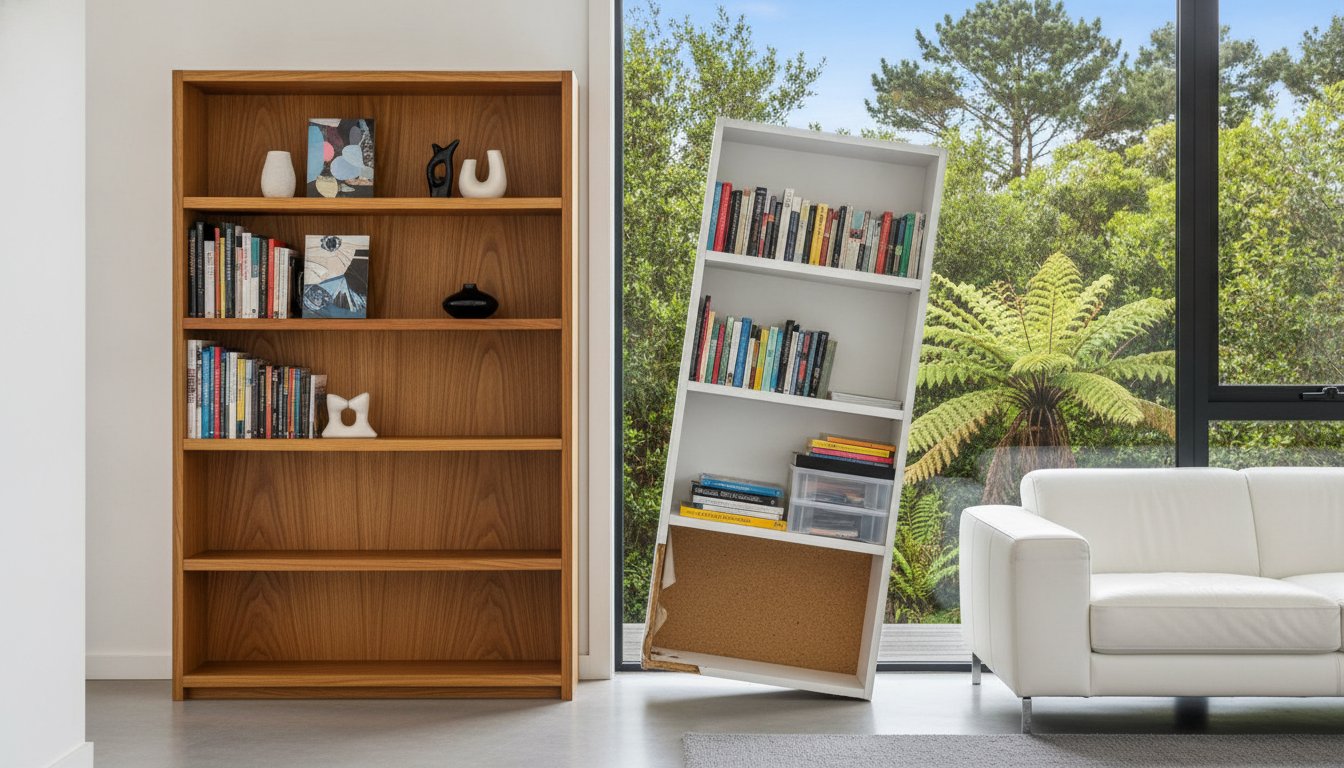
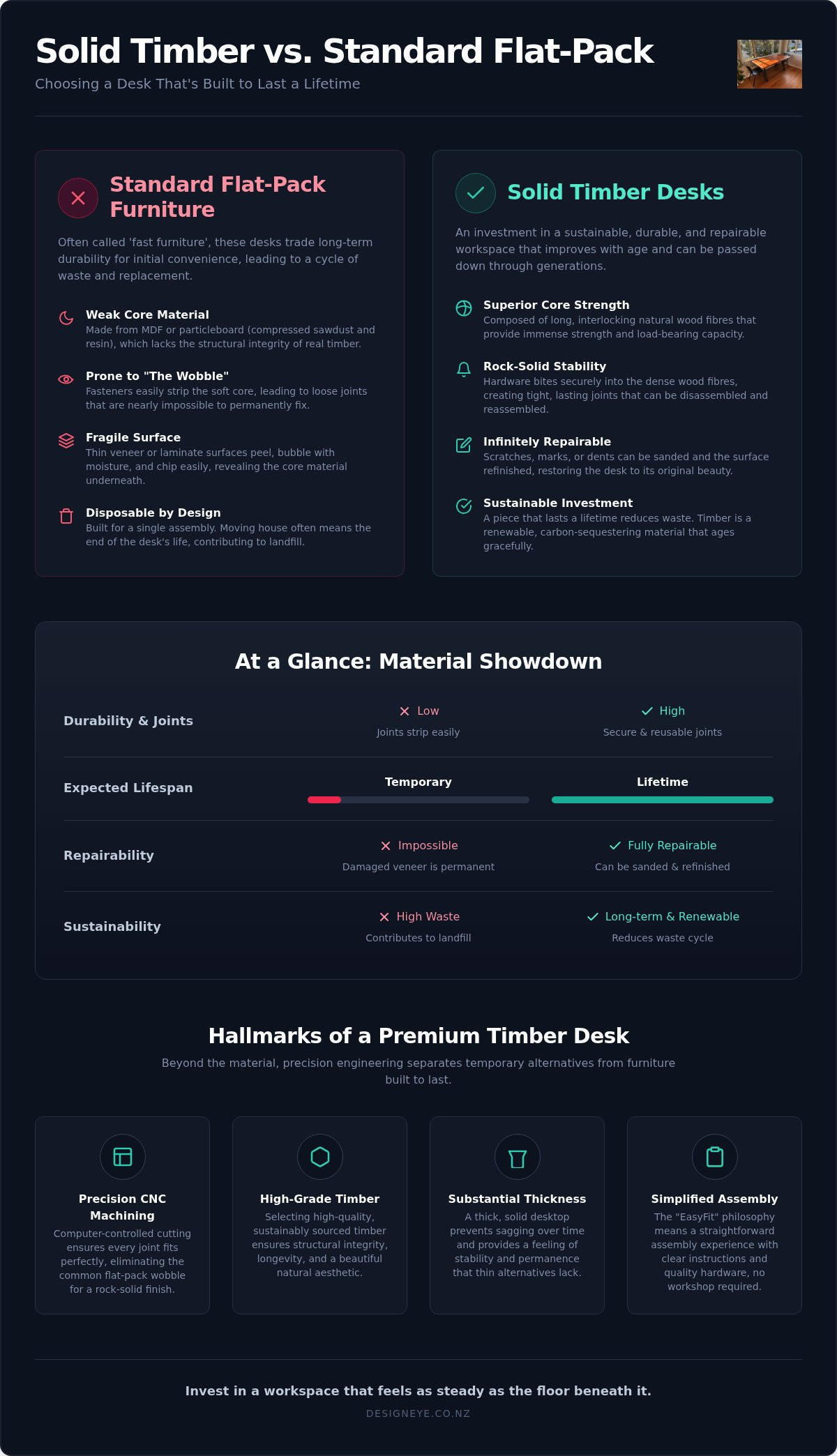
Standard office furniture often relies on MDF or particleboard. These materials are essentially compressed sawdust and resins. They are built for a single use. If you've ever tried to move a composite desk to a new house, you've likely seen the fasteners tear out of the soft core. Once the structural integrity of a particleboard joint is compromised, it's almost impossible to fix. The thin veneer or laminate surfaces also fail, peeling at the edges or bubbling when they come into contact with moisture. This "fast furniture" model creates a cycle of waste. It forces you into a recurring cost while contributing to the environmental burden of short-lived goods. Identifying these failures is simple: look for sagging spans, loose joints, or surfaces that feel hollow to the touch.
The Rise of the Sustainable Home Office
Natural timber offers a different experience. It is tactile and grounding. Unlike cold plastic or metal, solid wood brings a sense of calm and focus to a room. Choosing solid wood flat pack desks means investing in a piece that can be maintained for decades. If the surface gets a mark or a scratch, it can be sanded and refinished. It doesn't lose its value over time. Logistically, the kitset approach makes this high-end material accessible for any room. Moving a heavy, pre-assembled timber desk through a narrow hallway or up a flight of stairs is often impossible. Designing these pieces as precision kitsets solves the transport issue while ensuring the finished desk remains rock-solid. It bridges the gap between the maker's workshop and your home, providing a piece of furniture that is built to stay.
Timber vs. Veneer: The Real Cost of Cheap Materials
Many people confuse "wood effect" with actual timber. Veneer is simply a thin slice of wood glued over a core of MDF or particleboard. It looks acceptable on a showroom floor, but it lacks the structural integrity of a solid slab. For a deeper look at these differences, read our guide on solid wood furniture vs mdf. Choosing the right material is the difference between a desk that lasts five years and one that lasts fifty.
Durability: Why Grain Structure Matters
Solid timber is composed of long, natural fibres. These fibres interlock to create a material that handles weight and tension with ease. When you assemble solid wood flat pack desks, the hardware bites into these strong fibres. It creates a secure, permanent connection. Cheap composite desks often suffer from the "flat pack wobble" because the soft MDF core strips away as soon as you tighten a cam lock or screw. Timber doesn't have this weakness. It allows you to disassemble and reassemble your desk multiple times, which is essential if you move house or rearrange your office. The joints stay tight because the material itself is resilient.
Sustainability: Timber as a Long-term Investment
Buying a desk shouldn't be a three-year cycle. Solid timber is a carbon-sequestering material that improves with age. While veneer eventually peels, bubbles, or chips, solid wood develops a unique patina. It gains character from use. If you scratch the surface or leave a mark after years of work, you don't have to throw the desk away. You can sand it back and refinish it. This repairability is impossible with composite furniture. Choosing one quality piece over several disposable ones is a better outcome for the planet and your back pocket. Our workshop prioritises Solid Timber Products because they are designed for longevity, not just the initial sale. It's about creating furniture that stays out of the landfill.
Precision Engineering: How CNC Machining Solves the Flat Pack Wobble
A desk should feel like a single, immovable object. Most people associate kitset furniture with a persistent, distracting wobble that develops after just a few weeks of use. This instability usually stems from poor tolerances in mass-produced factory cuts. In our workshop, we approach the creation of solid wood flat pack desks through the lens of precision engineering. By using a Custom CNC (Computer Numerical Control) process, we can achieve a level of accuracy that traditional hand-cutting cannot match. It transforms a collection of timber parts into a high-performance workspace. This is the maker's perspective: using modern technology to perfect the stability of traditional timber furniture.
The CNC Difference: Precision to the Millimetre
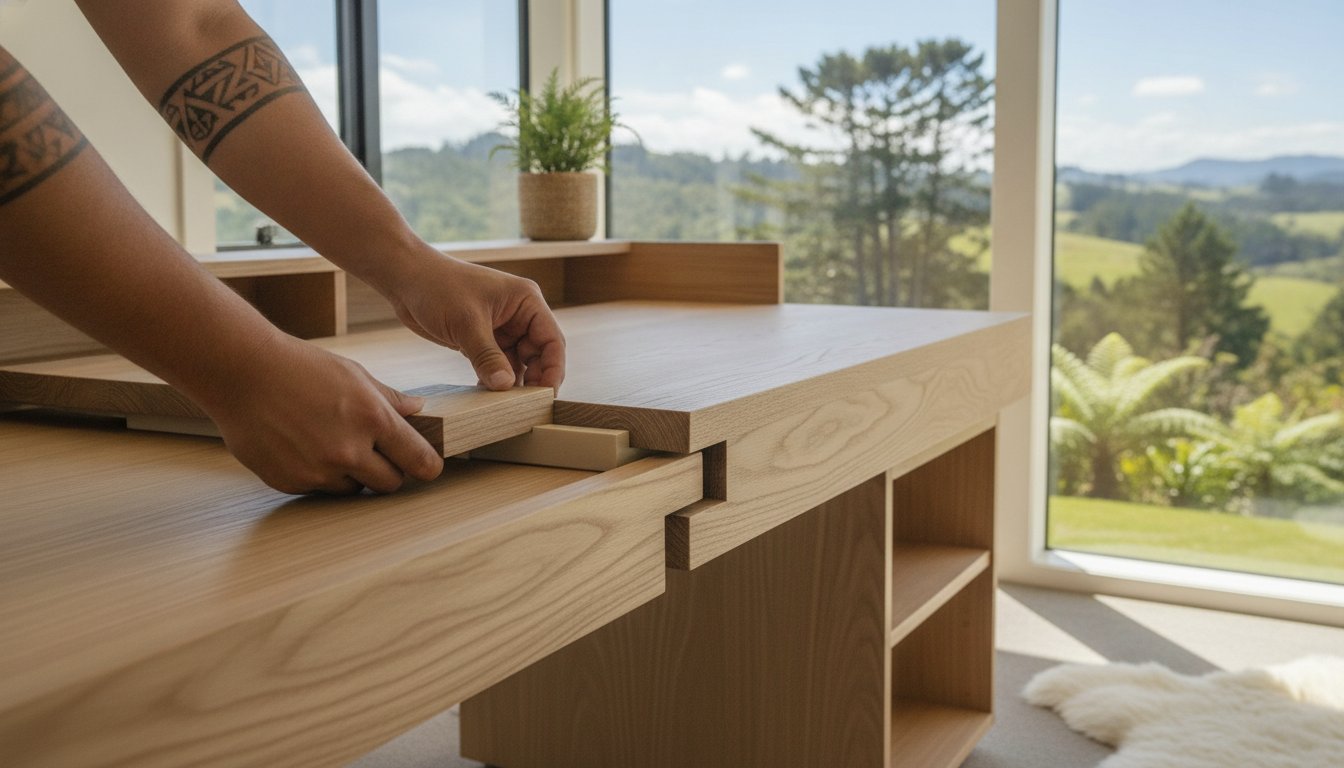
CNC machining uses computer-guided tools to cut timber with extreme accuracy. This process eliminates the human error often found in manual manufacturing. We work with incredibly tight tolerances, ensuring every tenon and mortise fits exactly as intended. This precision is the secret to a desk that feels solid. When joints are cut to the millimetre, they lock together to create structural rigidity. This allows us to design complex, interlocking components that don't rely on messy glues or excessive fasteners. The result is a clean, minimalist aesthetic that maintains its strength through years of daily use. Factory-made furniture often uses oversized holes to account for manufacturing errors; these gaps are where the wobble begins.
Tool-Free Assembly and Structural Integrity
The goal for a designer-maker like Simon is to make assembly intuitive. You shouldn't need a workshop full of tools to put your office together. By focusing on the EasyFit philosophy, we reduce the reliance on standard hardware. Precision-machined joints are designed to distribute weight more evenly across the timber grain than a single metal screw ever could. This creates a more stable platform for your monitors and equipment. It also simplifies the building process. A well-engineered desk should be satisfying to assemble, with parts that slide into place with a reassuring click. You get the convenience of a kitset without the structural compromises of typical retail furniture. Our workshop focuses on the intrinsic value of the material, using solid timber slabs and milled timber to ensure your desk remains a permanent fixture in your home.
Key Features to Look for in a High-Quality Timber Desk Kit
When you're evaluating solid wood flat pack desks, the technical specifications tell the real story. You should start by checking the timber thickness. A premium desktop should feel substantial, typically ranging from 20mm to 30mm or more. This thickness isn't just about aesthetics; it provides the weight necessary to keep the desk anchored and stable during daily use. You should also consider the finish. Natural oils and waxes preserve the tactile feel of the grain and are simple to maintain over time. In contrast, heavy lacquers can feel like plastic and are difficult to repair if they chip. Adopting minimalist solid wood furniture helps reduce visual clutter, allowing you to focus on the work at hand without distraction.
Measuring Your Space for the Perfect Fit
A desk that looks good but doesn't fit your body is a poor investment. Standard desk height is usually around 730mm to 750mm, but you should test what works for your specific chair and posture. Depth is equally important. If you use large monitors or multiple screens, a depth of at least 600mm to 750mm ensures you aren't sitting too close to the display. Check the footprint of the legs. Some designs have cross-bracing or wide bases that can interfere with your feet or prevent your chair from tucking in fully. If your desk will sit flush against a wall, look for designs that allow for cable clearance to avoid pinching wires or damaging the timber edges.
Selecting the Right Timber Species
The choice of timber species affects both the durability and the atmosphere of your office. Hardwoods are denser and offer superior resistance to scratches and dents, making them ideal for a workspace that sees heavy use. Softwoods are lighter and easier to move but may show wear more quickly over the years. Consider the existing timber elements in your room. You don't necessarily need an exact colour match, but staying within the same colour temperature creates a cohesive look. Light timbers can make a small room feel more spacious and airy, while darker timbers provide a sense of grounded, traditional authority. Explore our range of Solid Timber Products to find a kitset that matches your workspace requirements and aesthetic preferences.
The EasyFit Approach: Redefining the Assembly Experience
Most people dread the assembly process. It usually involves confusing diagrams, missing parts, and low-grade hardware that strips at the first sign of pressure. The EasyFit range changes this by aligning the design process with the physical reality of the workshop. We believe that solid wood flat pack desks should be as satisfying to build as they are to use. This isn't mass-produced furniture shipped from a nameless factory across the globe. It is a local response to the need for quality, durability, and simplicity. By choosing a product designed and made within the country, you support the local economy while ensuring your furniture meets a higher standard of material selection and craftsmanship.
Design, Machine, Make: The Design Eye Process
Inside the Design Eye workshop, the process starts with raw, solid timber slabs and carefully milled timber. We use Custom CNC technology to translate digital designs into physical parts with absolute precision. This isn't just about speed; it's about fitment. Every design undergoes rigorous testing for structural integrity before it ever reaches a customer. We check the tolerances of every joint and the weight-bearing capacity of every span. This direct connection between the maker and the product provides a level of quality control that big-box retail cannot replicate. Simon, the maker, oversees the transition from raw material to finished kitset. If you have a question about your desk, you are speaking with the person who understands exactly how it was machined and finished.
The Joy of Building Something Real
There is a unique connection that forms when you assemble a piece of furniture made from real timber. You feel the weight of the wood and see the natural variation in the grain. This process connects you to the craftsmanship of the piece. Unlike disposable alternatives, solid wood flat pack desks are built for the long term. They can be disassembled for a move, repaired if they get marked, and eventually passed down to the next generation. It is about owning something real that serves a functional purpose without sacrificing aesthetic value. Owning a desk that stays steady through years of work provides a sense of reliability that composite materials simply cannot offer. If you are ready for a workspace that reflects these values, explore our EasyFit range of Solid Timber Products to find a desk built for a lifetime of use.
Build a Workspace That Lasts
Choosing a desk is about more than finding a surface for your laptop. It's about selecting a foundation for your daily focus. We've seen how 100% solid timber construction provides a level of durability that composite materials simply can't match. By using precision CNC machining, we've eliminated the instability often found in standard kitset furniture. These solid wood flat pack desks are designed and made locally by a master maker, ensuring every joint fits perfectly without the need for complex tools.
Investing in quality means you won't be replacing your office setup every few years. Our EasyFit range focuses on structural integrity and the natural beauty of real wood, avoiding the resins and glues found in mass-produced alternatives. You deserve a workspace that is as resilient as it is functional. It's time to move away from disposable furniture and toward a piece that develops character over decades of use.
Browse the EasyFit Solid Timber Desk Range to start your journey toward a better workspace. We're confident you'll appreciate the difference that real craftsmanship makes to your home office.
Frequently Asked Questions
Are solid wood flat pack desks as sturdy as pre-assembled ones?
Yes, a well-engineered solid timber kitset is just as stable as a pre-assembled unit. The strength comes from precision CNC machining which ensures every joint fits with absolute accuracy. This eliminates the gaps that cause wobble in standard retail furniture. Because the hardware bites into natural timber fibres rather than soft composite cores, the connections remain rigid. These solid wood flat pack desks provide a permanent, high-performance workspace that handles heavy equipment without sagging or shifting.
What tools do I need to assemble a solid timber kitset desk?
You don't need a full workshop of tools to set up your new workspace. Most of our EasyFit designs are engineered for a straightforward assembly process that requires only basic hand tools. We focus on creating intuitive joints that slide into place securely. This approach reduces the reliance on complex hardware and power tools. You can achieve a professional, workshop-quality result in your own home with minimal effort and no specialised technical knowledge.
How do I maintain and clean a solid wood desk surface?
Maintaining a natural timber surface is simple and rewarding. For daily cleaning, use a soft, slightly damp cloth to wipe away dust and spills. Avoid using harsh chemical cleaners or abrasive pads that can strip the finish. If your desk has an oiled or waxed surface, applying a fresh coat every year or two will keep the grain looking vibrant and protect it from moisture. This simple routine preserves the tactile feel of the wood for decades.
Can I disassemble a solid wood flat pack desk if I move house?
Yes, these desks are designed to be moved and reassembled without losing their structural integrity. Unlike particleboard furniture that often crumbles when fasteners are removed, solid timber is resilient. The natural grain holds screws and bolts securely even after multiple assembly cycles. This makes our solid wood flat pack desks a practical choice for people who rent or plan to move. You can pack the components flat for safe transport and set them up again with ease.
How long does it usually take to assemble a high-quality timber desk?
Most customers find they can complete the assembly in less than an hour. Because every component is precision-cut in our workshop, you won't spend time struggling with parts that don't align. The process is methodical and logical, moving from the base structure to the desktop. We aim to make the building experience as satisfying as using the finished product. A clear, step-by-step approach ensures you can transition from a flat package to a functional office quickly.
What is the difference between solid timber and wood veneer?
Solid timber is a single piece of natural wood throughout its entire thickness. This allows it to be sanded, repaired, and refinished if it ever sustains damage. Wood veneer is a very thin layer of timber glued over a core of MDF or particleboard. While veneer might look similar on the surface, it cannot be easily repaired and lacks the weight-bearing strength of real timber. Solid wood offers superior longevity and a more grounding, tactile experience.
Are the timbers used in these desks sustainably sourced?
We prioritise sustainability by using responsibly sourced timber for all our products. By manufacturing locally in our workshop, we maintain full transparency over our supply chain and material selection. Timber is a natural, carbon-sequestering material that offers a much lower environmental footprint than plastic or metal alternatives. Choosing furniture made from real wood is an investment in a renewable resource that is designed to stay out of the landfill for a lifetime.
What happens if a part of my kitset desk gets damaged?
One of the greatest benefits of solid wood is its repairability. Small scratches or dents can often be sanded out and refinished at home to look like new. If a specific component sustains significant damage, our local manufacturing process allows us to provide advice or replacement parts. You aren't left with a useless desk because of one broken piece. This level of support is a direct benefit of buying from an artisan workshop rather than a large retailer.

Frequently Asked Questions
Yes, a well-engineered solid timber kitset is just as stable as a pre-assembled unit. The strength comes from precision CNC machining which ensures every joint fits with absolute accuracy. This eliminates the gaps that cause wobble in standard retail furniture. Because the hardware bites into natural timber fibres rather than soft composite cores, the connections remain rigid. These solid wood flat pack desks provide a permanent, high-performance workspace that handles heavy equipment without sagging or shifting.
You don't need a full workshop of tools to set up your new workspace. Most of our EasyFit designs are engineered for a straightforward assembly process that requires only basic hand tools. We focus on creating intuitive joints that slide into place securely. This approach reduces the reliance on complex hardware and power tools. You can achieve a professional, workshop-quality result in your own home with minimal effort and no specialised technical knowledge.
Maintaining a natural timber surface is simple and rewarding. For daily cleaning, use a soft, slightly damp cloth to wipe away dust and spills. Avoid using harsh chemical cleaners or abrasive pads that can strip the finish. If your desk has an oiled or waxed surface, applying a fresh coat every year or two will keep the grain looking vibrant and protect it from moisture. This simple routine preserves the tactile feel of the wood for decades.
Yes, these desks are designed to be moved and reassembled without losing their structural integrity. Unlike particleboard furniture that often crumbles when fasteners are removed, solid timber is resilient. The natural grain holds screws and bolts securely even after multiple assembly cycles. This makes our solid wood flat pack desks a practical choice for people who rent or plan to move. You can pack the components flat for safe transport and set them up again with ease.
Most customers find they can complete the assembly in less than an hour. Because every component is precision-cut in our workshop, you won't spend time struggling with parts that don't align. The process is methodical and logical, moving from the base structure to the desktop. We aim to make the building experience as satisfying as using the finished product. A clear, step-by-step approach ensures you can transition from a flat package to a functional office quickly.
Solid timber is a single piece of natural wood throughout its entire thickness. This allows it to be sanded, repaired, and refinished if it ever sustains damage. Wood veneer is a very thin layer of timber glued over a core of MDF or particleboard. While veneer might look similar on the surface, it cannot be easily repaired and lacks the weight-bearing strength of real timber. Solid wood offers superior longevity and a more grounding, tactile experience.
We prioritise sustainability by using responsibly sourced timber for all our products. By manufacturing locally in our workshop, we maintain full transparency over our supply chain and material selection. Timber is a natural, carbon-sequestering material that offers a much lower environmental footprint than plastic or metal alternatives. Choosing furniture made from real wood is an investment in a renewable resource that is designed to stay out of the landfill for a lifetime.
One of the greatest benefits of solid wood is its repairability. Small scratches or dents can often be sanded out and refinished at home to look like new. If a specific component sustains significant damage, our local manufacturing process allows us to provide advice or replacement parts. You aren't left with a useless desk because of one broken piece. This level of support is a direct benefit of buying from an artisan workshop rather than a large retailer.